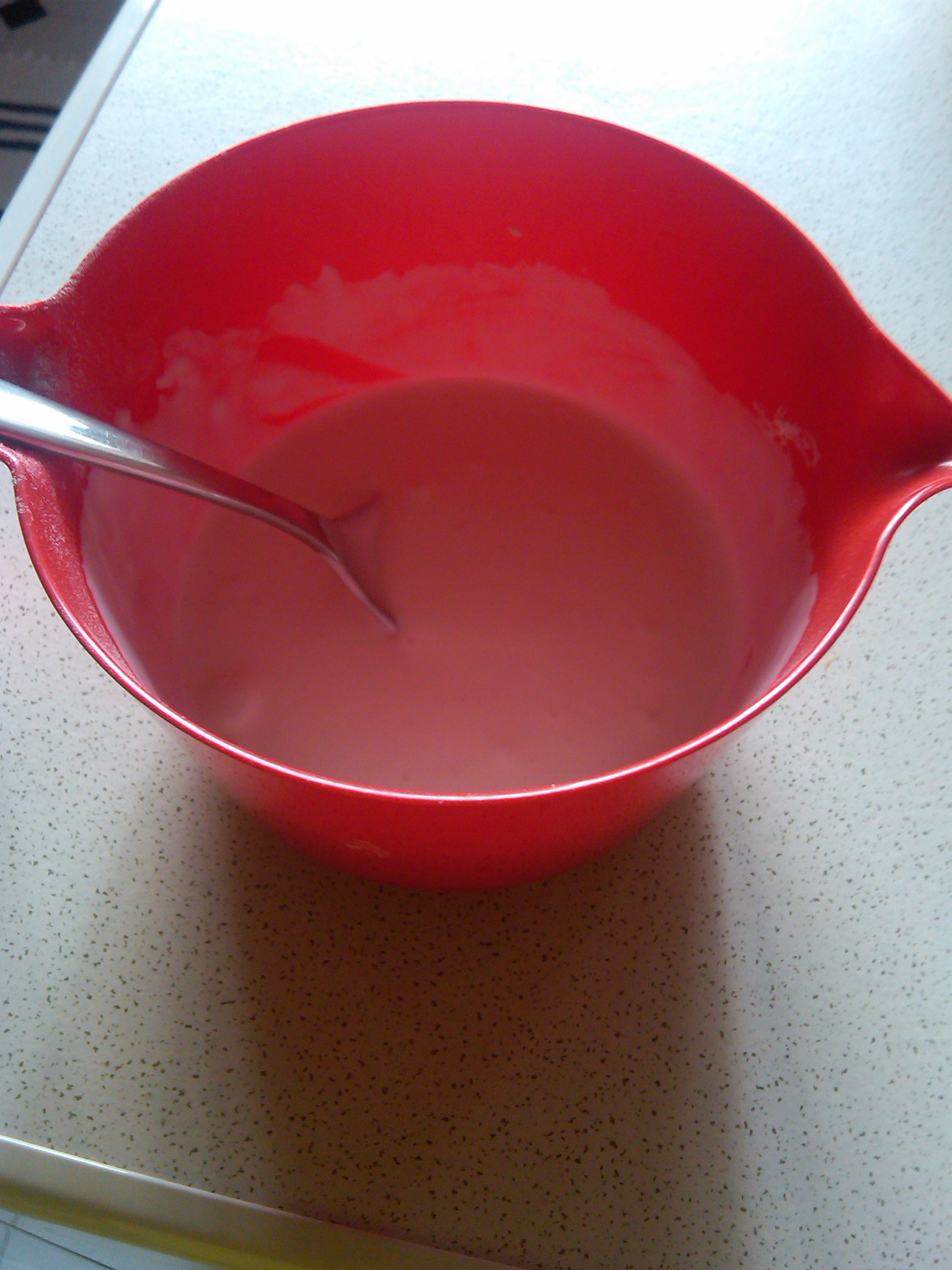
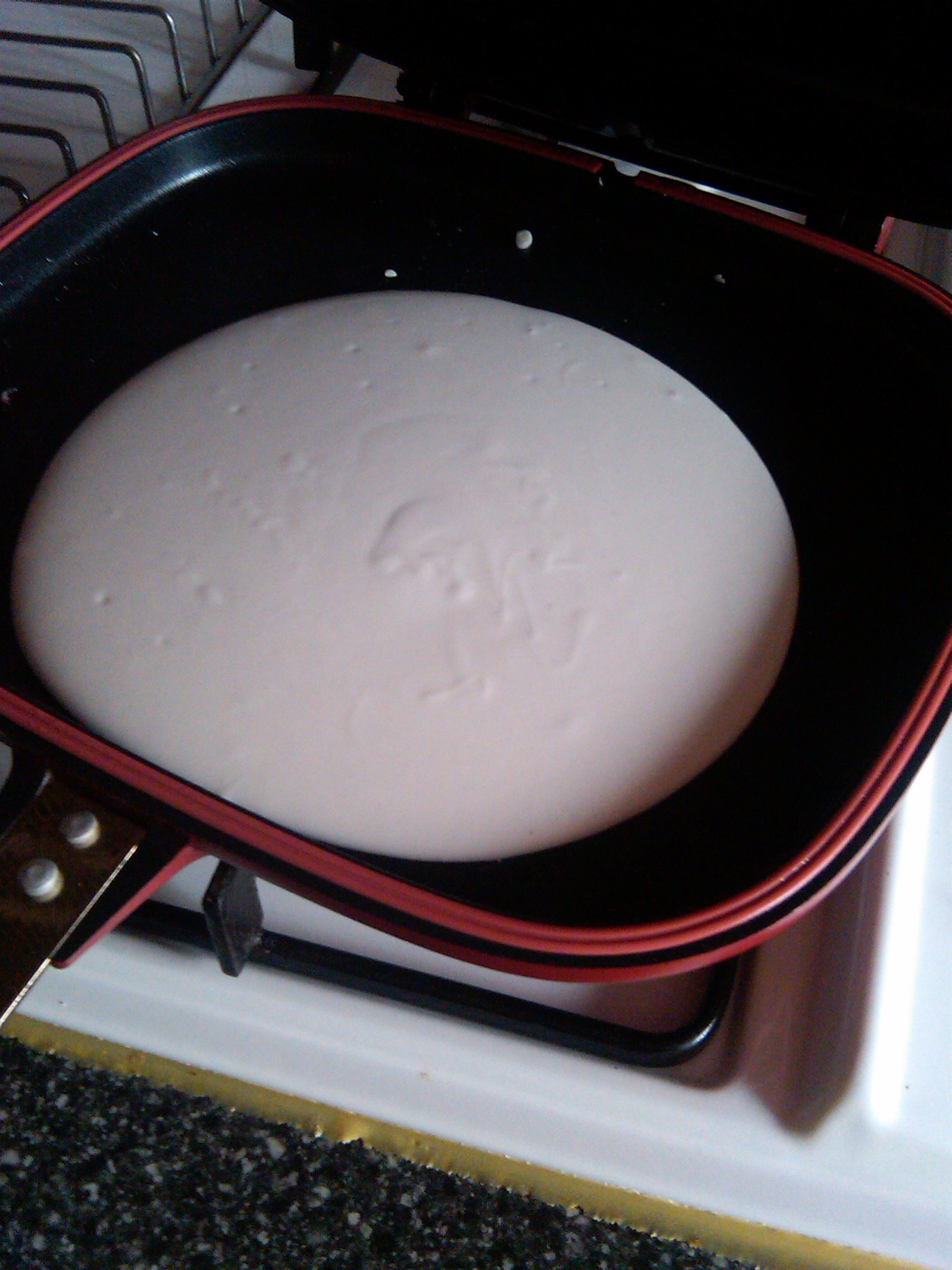
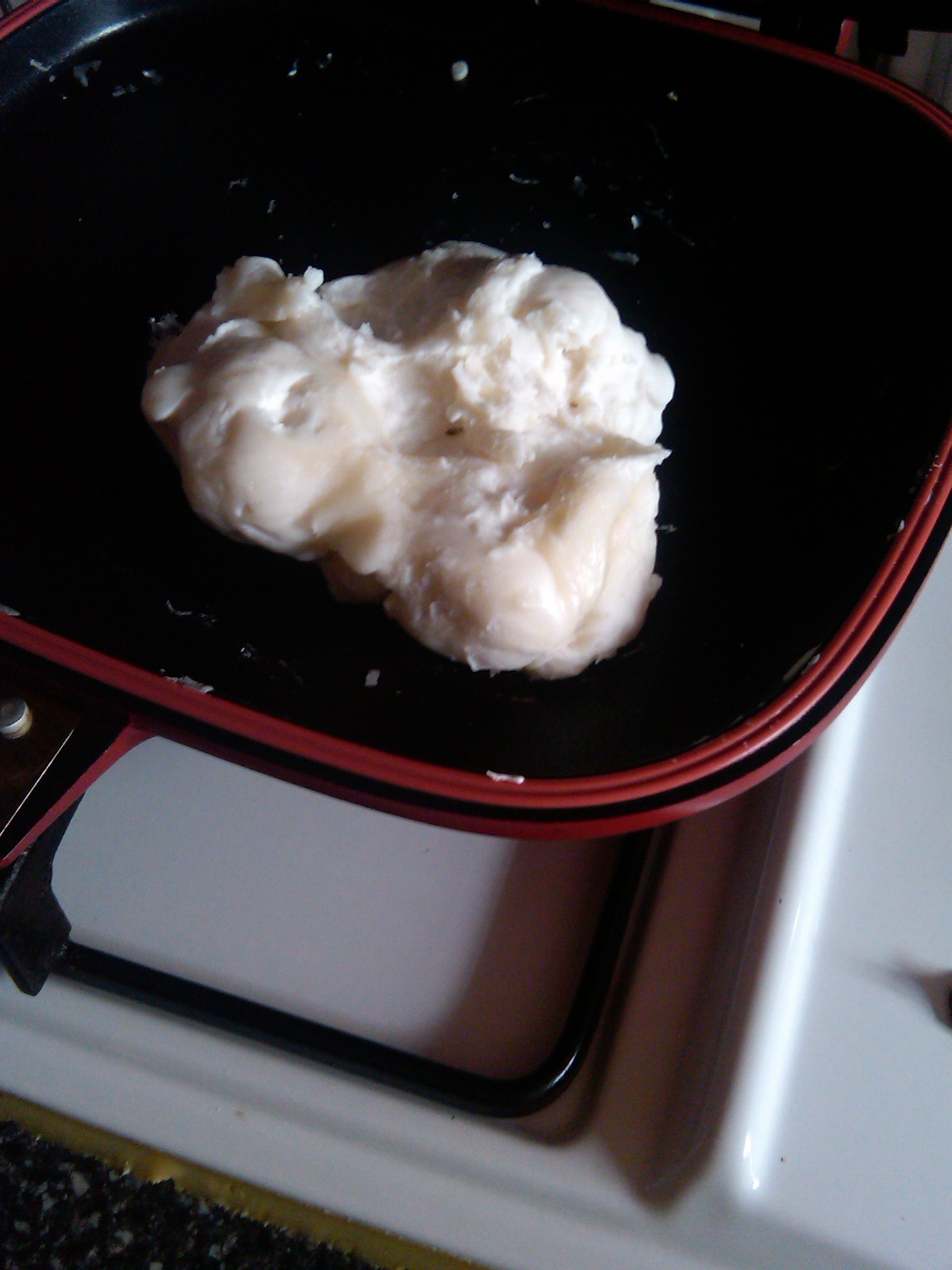
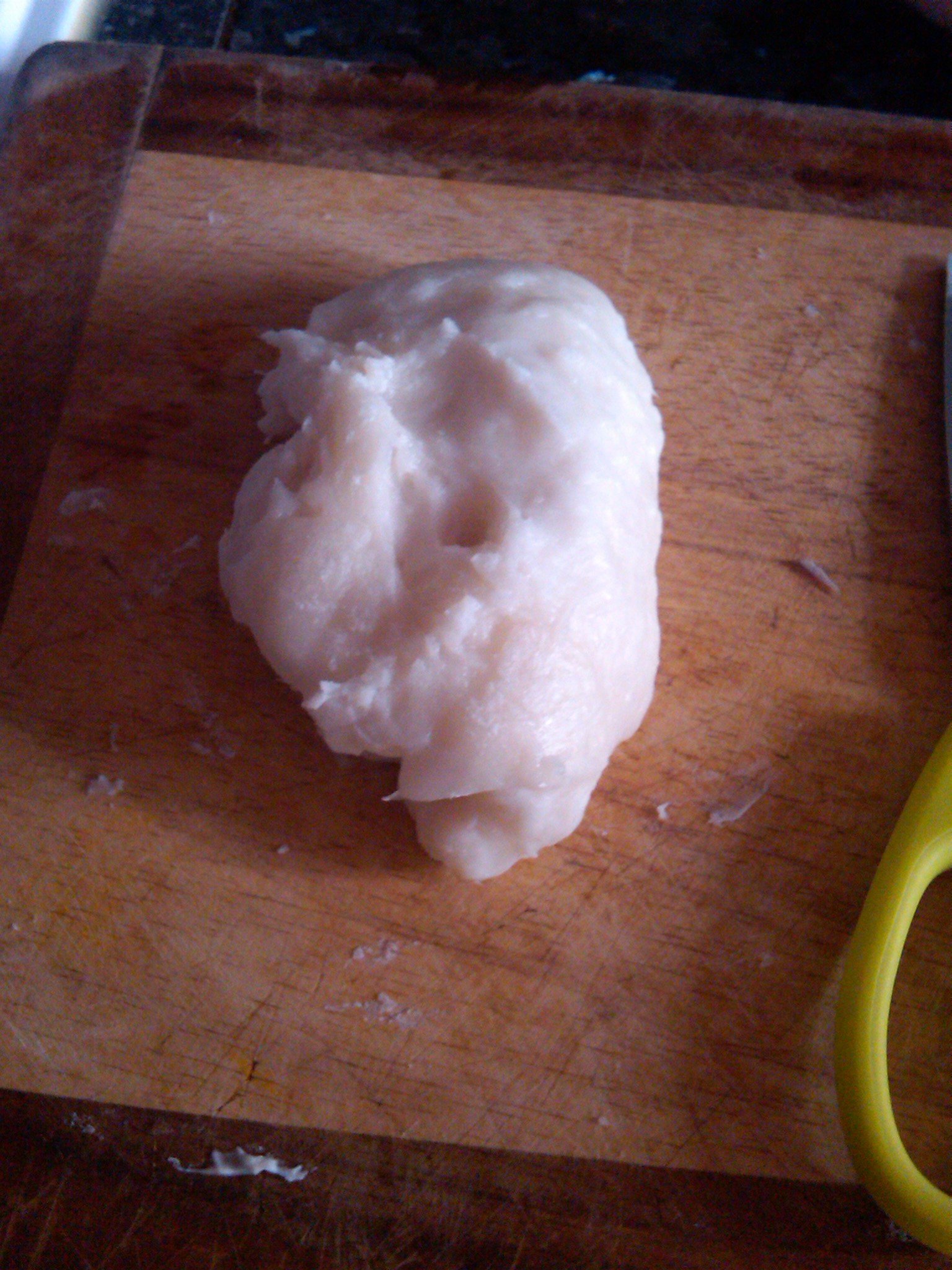
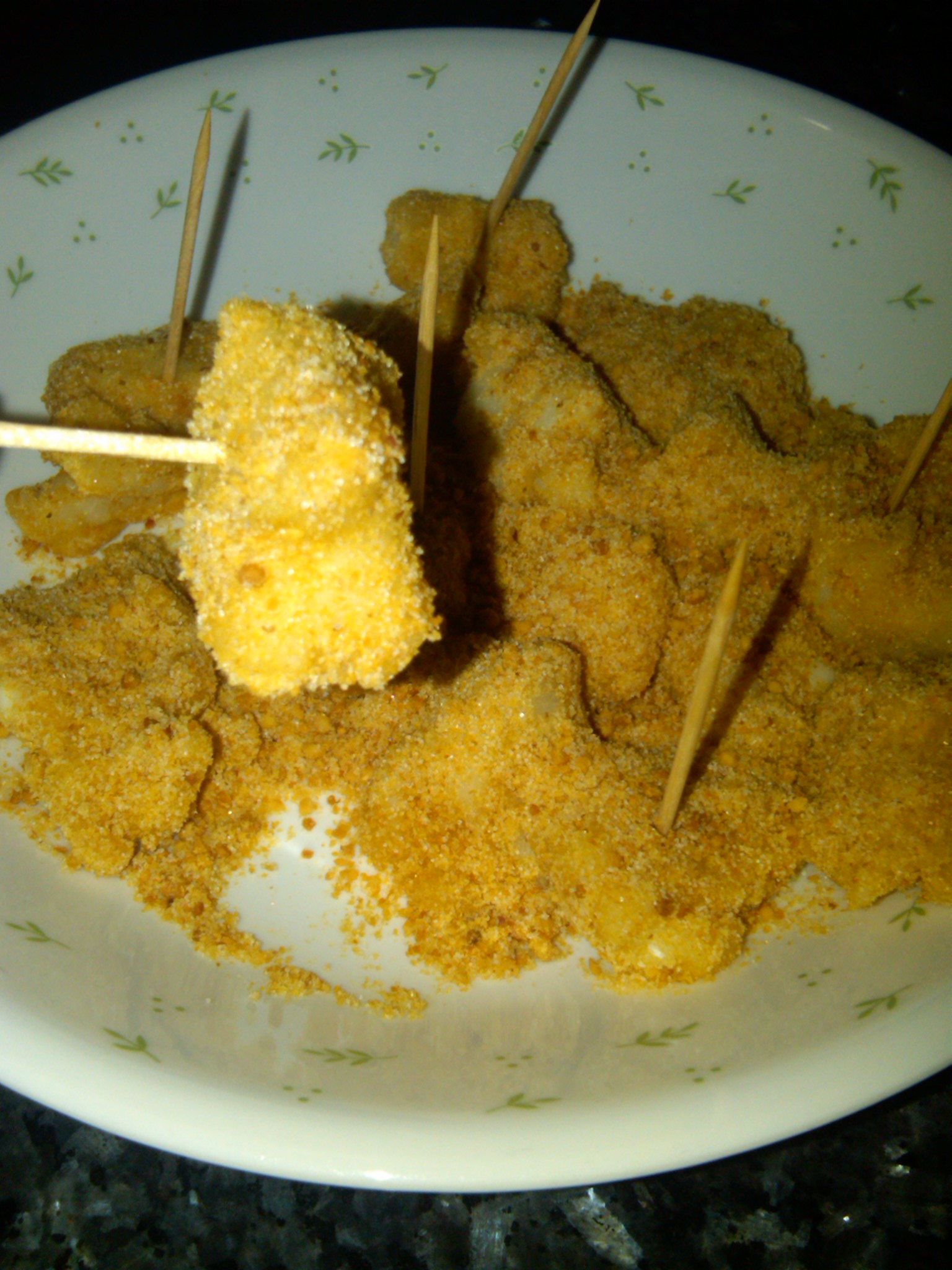
Muah! Muah! Muah! I love muah chee and now, thanks to my new toy, the Happy Call pan, I can make my own muah chee anytime I want! Muah!
~ seeking peace spice by spice by spice
Muah! Muah! Muah! I love muah chee and now, thanks to my new toy, the Happy Call pan, I can make my own muah chee anytime I want! Muah!
Having to create lesson packages for Emily of Emerald Hill ignited my obsession for Peranakan food for a while. For quite some time, I was craving Peranakan dishes. I made my mother cook mee siam and then bought kueh pie tee shells from Cold Storage so that my mother is forced to make the filling for it. To be fair, the first time I did compensate her but when the craving came again, I just bought the pie tee cups and asked her ever so sweetly to make the filling. Again.
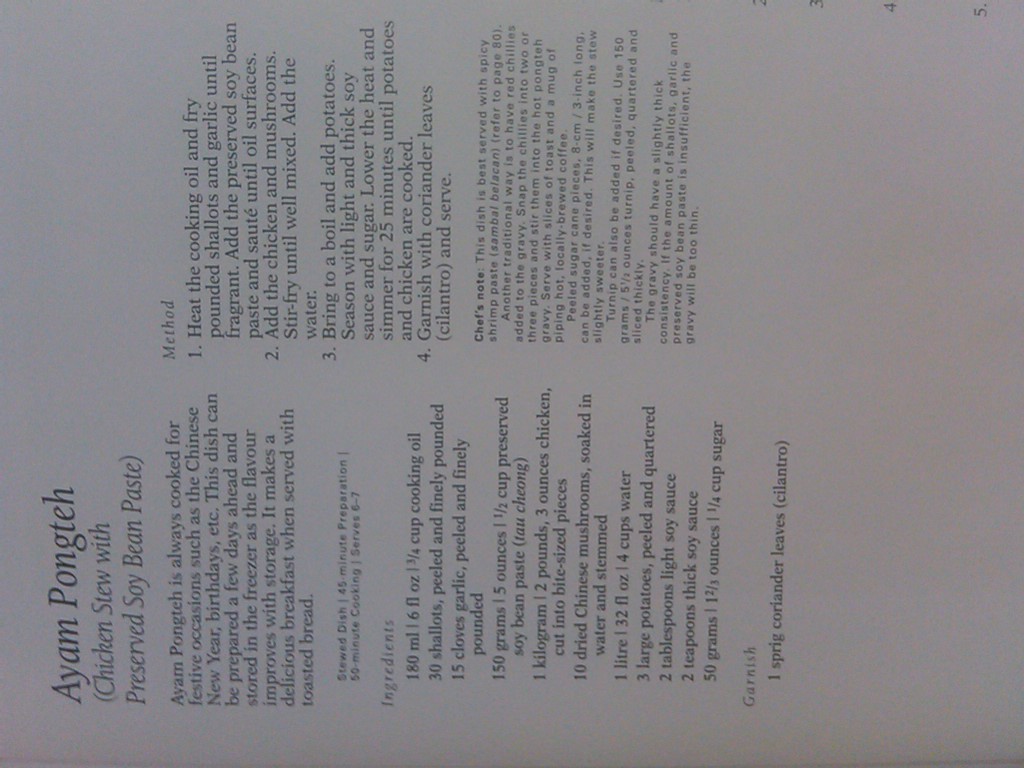
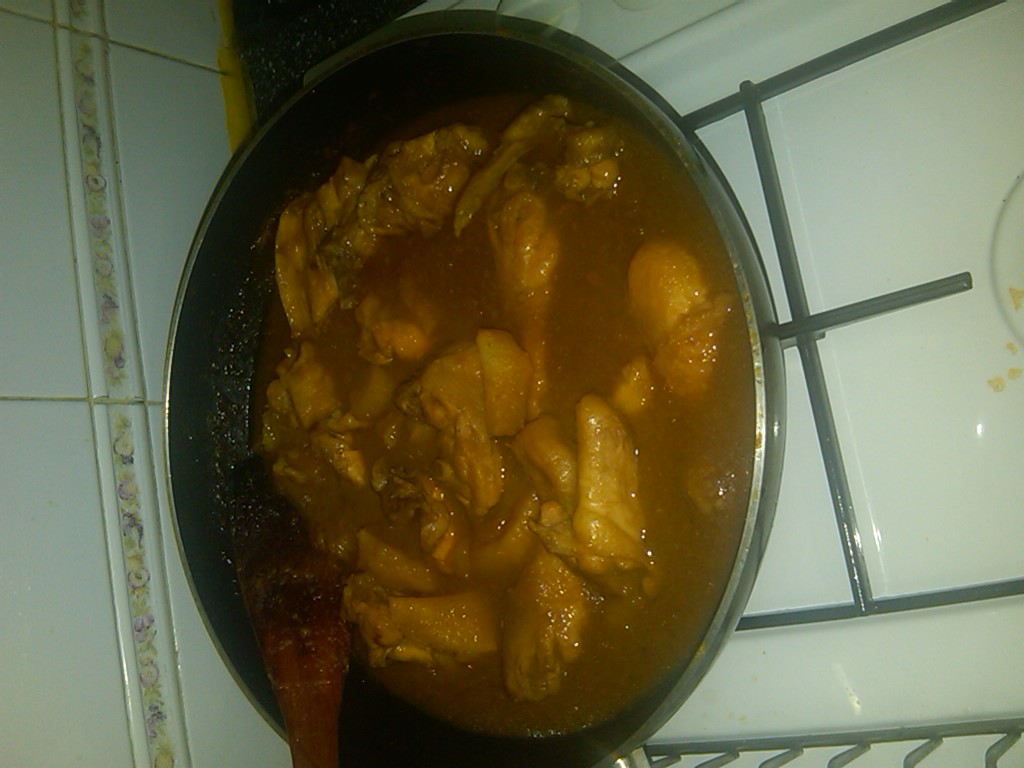
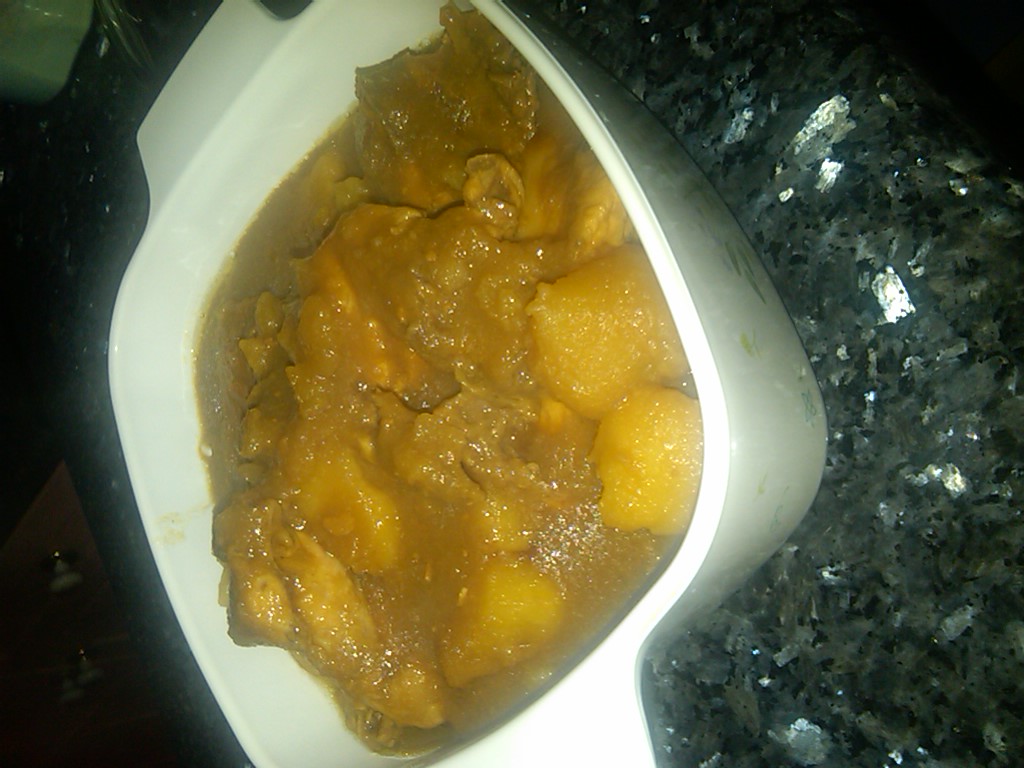
Then one night I decided to open up my old Peranakan cookbook written by a famous Malaysian cook – Florence Tan – and found a recipe so simple that it begged to be cooked that very night. Yes, that very night (anyway, I had a defrosted chicken lying around in the fridge) I made this simple simple dish, following exact measurements given (using my baking cups to measure out my taucheong!) and it was a success. The kids and the adult loved it.
It truly has been ages since I last update but it’s not because of laziness. My MAC was completely spoilt. And while now it seems to be A-OK, it is working at a very slow speed.
So I shall resume by sharing about my latest craze: making my own chicken rice – the authentic way. Including how to chop it up chinese style.
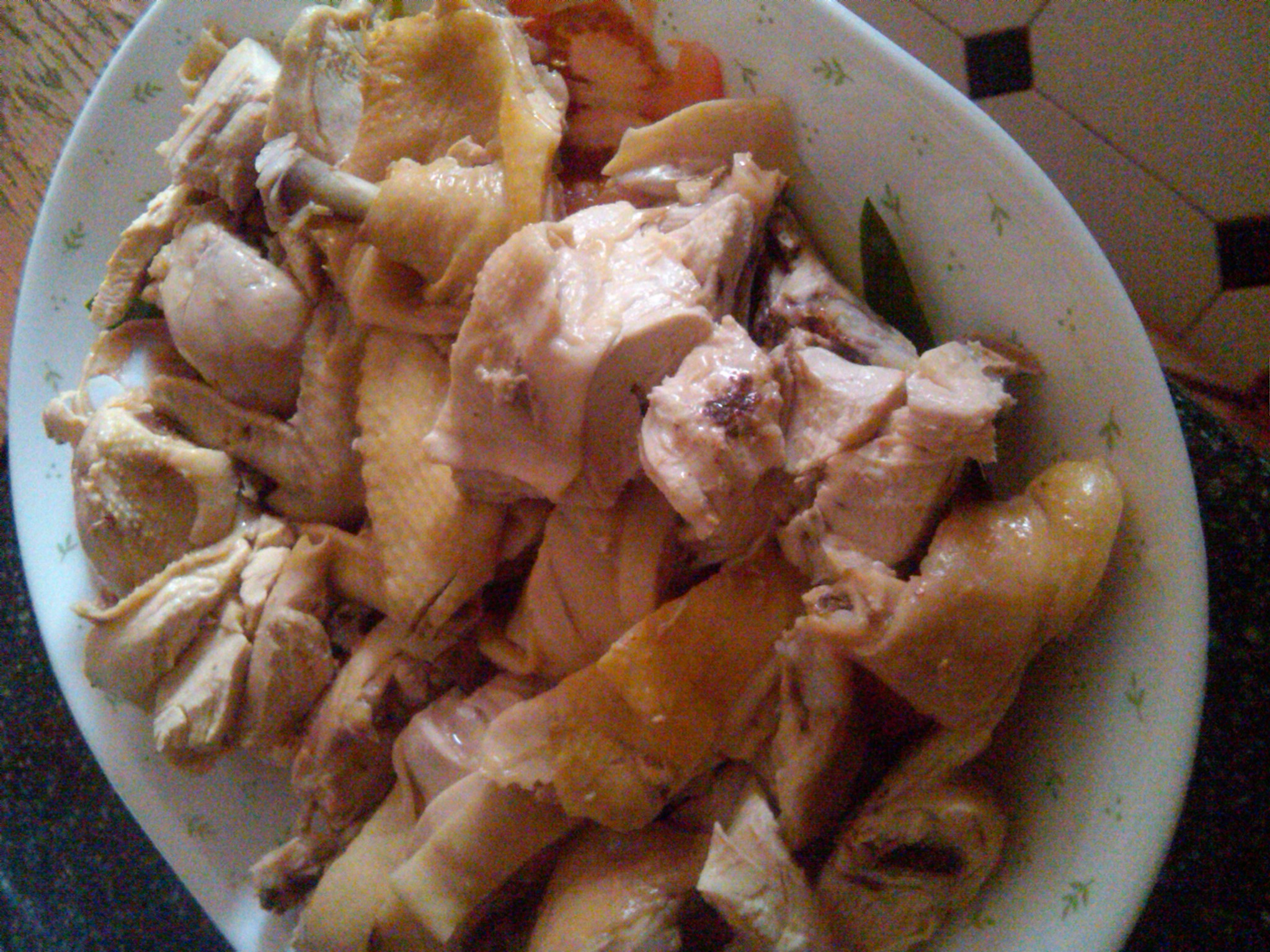
It’s all very simple actually. For the white chicken version, I boiled one whole chicken cut in half for easier handling in a pot of water that has lots of sliced ginger and one or two (if small) whole onions. After 20-25 minutes of cooking under high heat, I turned off the heat off and let the chicken just stay in there for a further 20-30 min. And then when I am ready to take the chicken out, I stand by a basin of ice-cold water and dunk the chicken in there. This step is extremely crucial in achieving a gelatinous, firm skin.
For the rice, I used the same water that I had boiled the chicken in, but before that, I used ready-made Chicken rice paste from the shelf to fry my rice (basmati) in. I also added a pandan leaf. Next time, I will try just using garlic and ginger and nothing else.
For the chilli sauce, plenty of fresh red chillies, loads more of chilli padi (red), lime juice, sugar and salt.
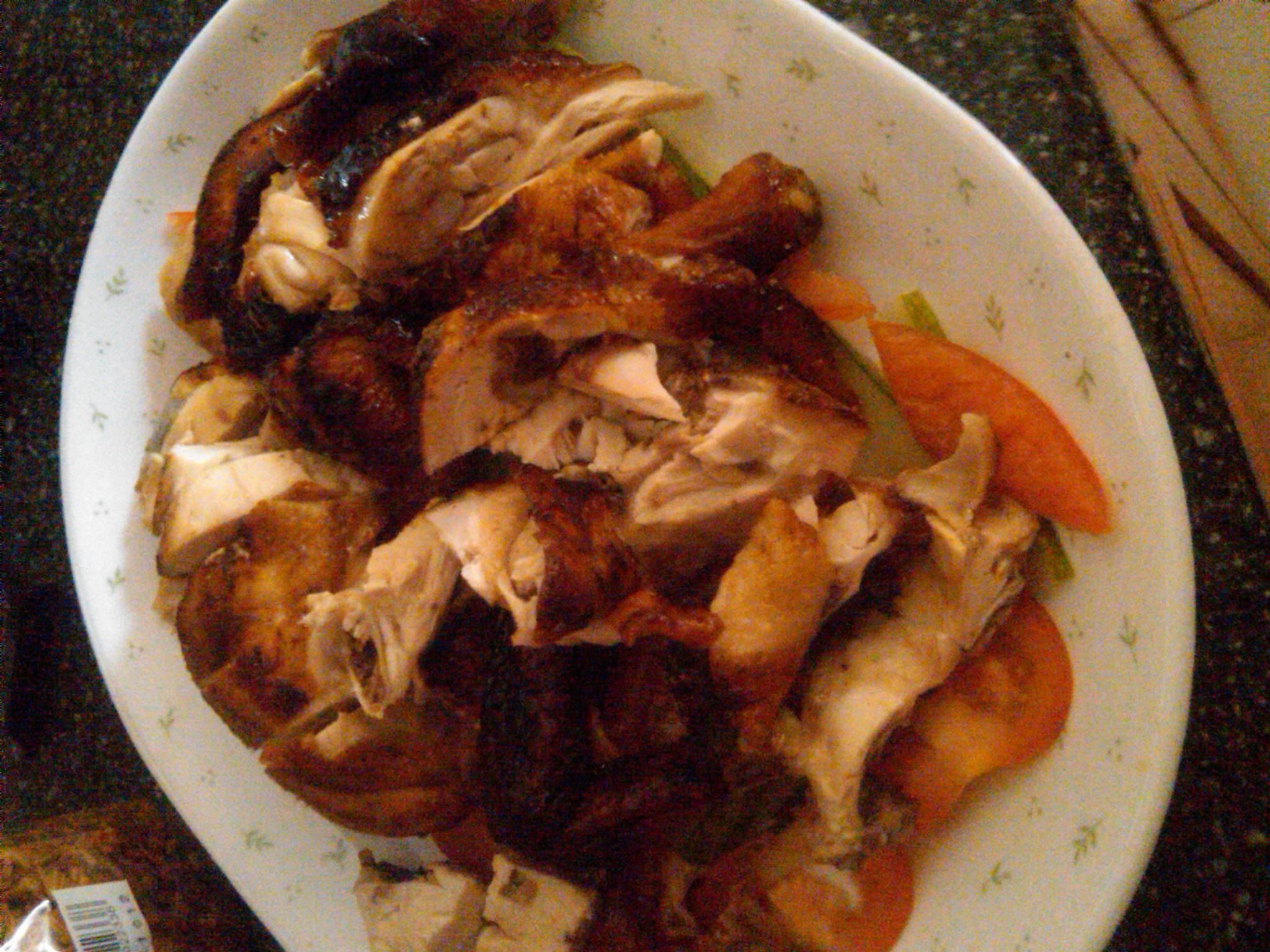
Then I decided to make a roasted version just a few days ago. I marinated the chicken with light soya sauce, sweet soya sauce, honey and garlic/ginger paste. The next time, I will also use five spice powder. The real roasted variety found in hawker centres is actually fried but I’d rather roast mine in the oven. The result is OK but the skin will not be as crispy.
And then, I cloned my chicken rice by assembling it the same way as in my favourite halal chicken rice stall -Tang’s Tea house. I sliced cucumbers thinkly the same way and drizzled a mixture of light soy sauce and sesame oil over my chopped chicken.
Speaking of chopped chicken… this is where I learnt how to do it properly last Tuesday. http://www.youtube.com/watch?v=l0gqdhl7PCo
It was so fun! I finally made use of my cleaver.
Alas, I didn’t manage to take a picture of my table that day. But it was enjoyable and I shall be cooking this again and again and again…
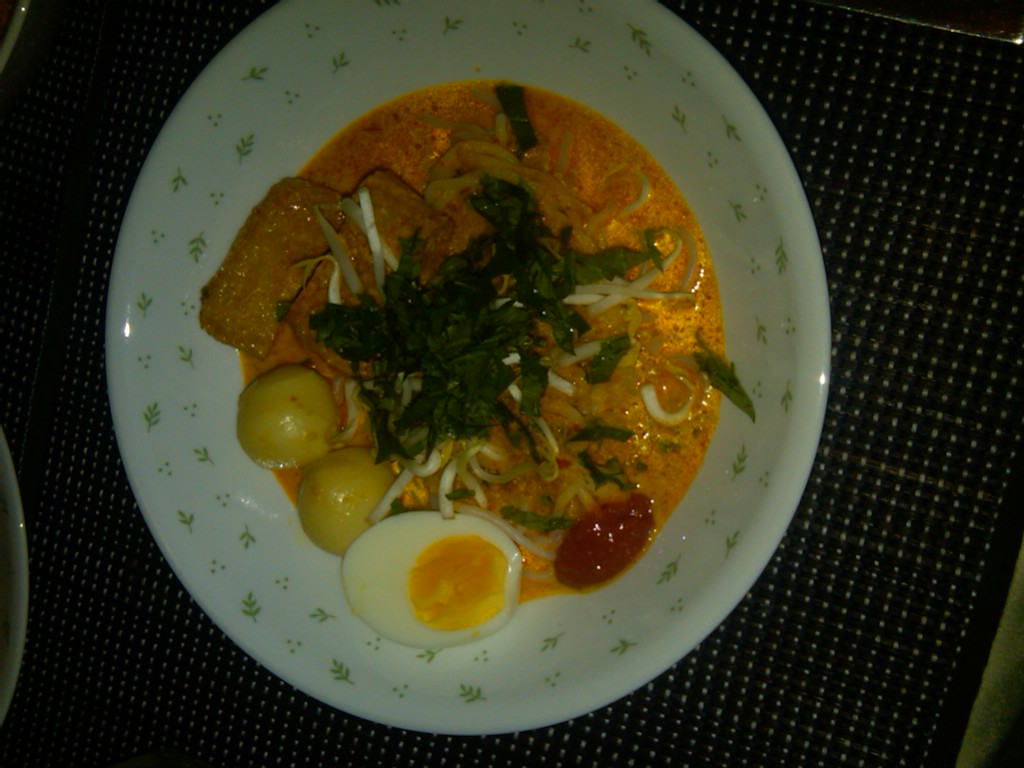
The Little Girl has been craving for laksa. She just loves laksa and so do I but I’ve got absolutely no idea how to make it. The Malay style laksa which looks the same as the Singapore one uses fish. Well. I decided to cop out and do the Singapore style Chinese version which doesn’t use fish at all in its gravy.
At my favourite (actually, not favourite but more like convenient) NTUC, I called my mom and asked her what goes into the paste. Oh, the usual, she replied. Onions, garlic, lots of dried shrimp,… Simple enough. I grabbed the ingredients I needed and then when I wanted to buy the tau pok (fried/dried tofu) I noticed this…
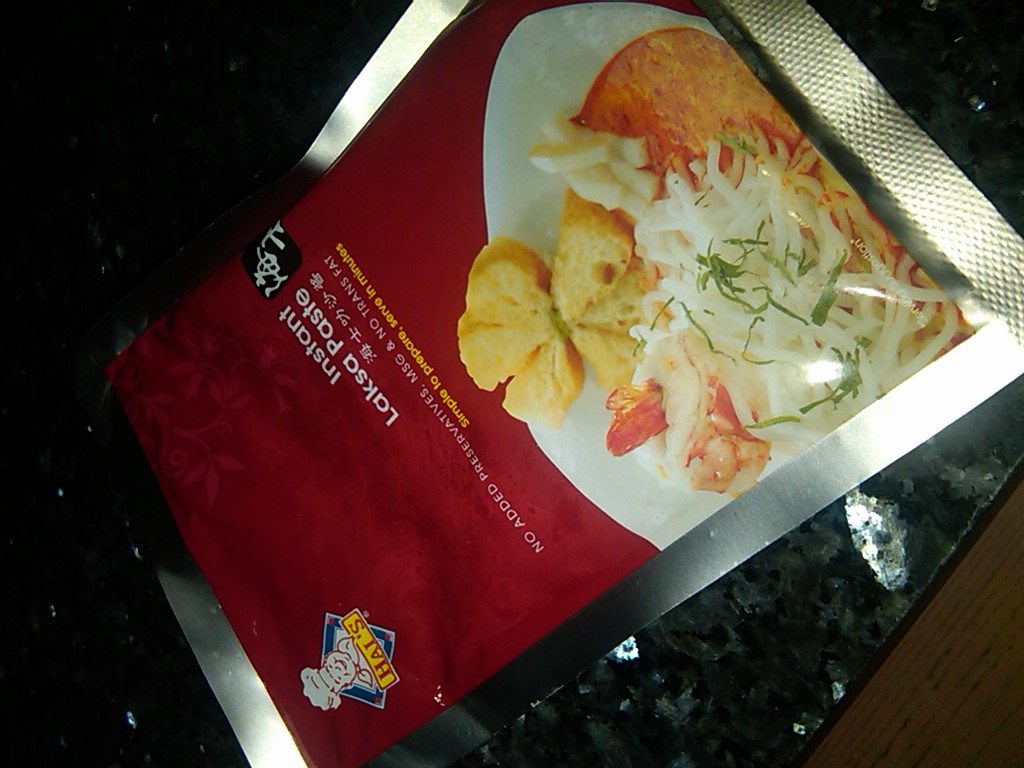
Well, well. I grabbed that packet.
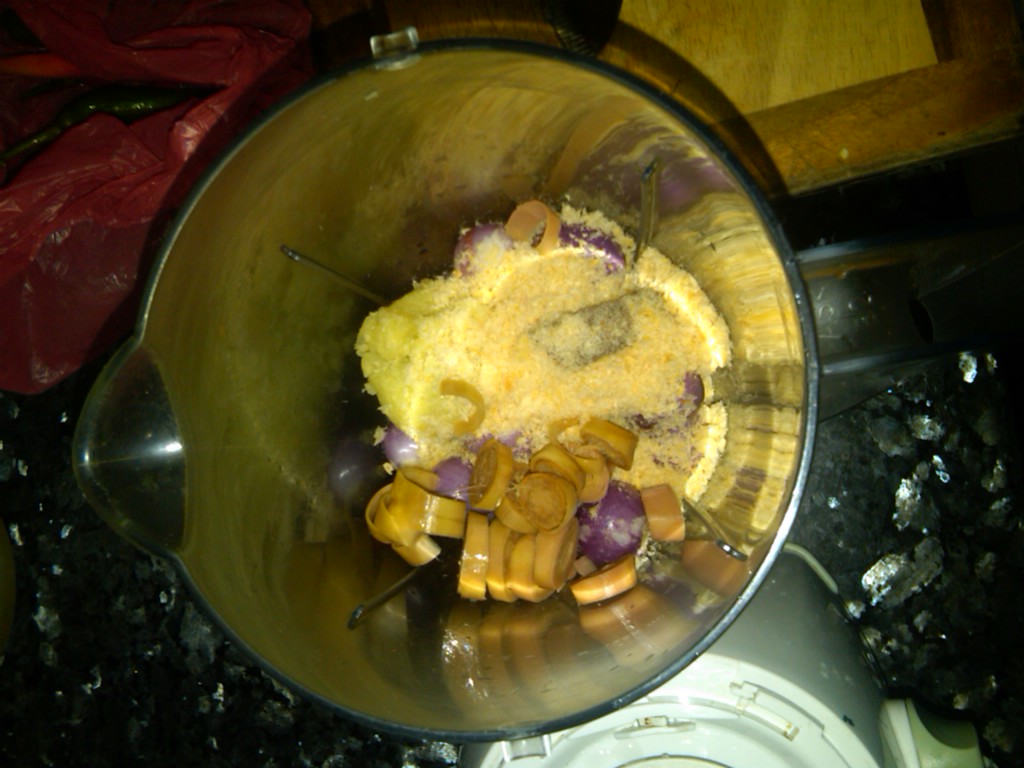
Back home in the kitchen, I made the paste. In a blender, I added onions, garlic, a bit of belacan, dried shrimp, bunga kantan (ginger torch flower), lemongrass, fresh turmeric. And blended all of them with a bit of water to form a paste.
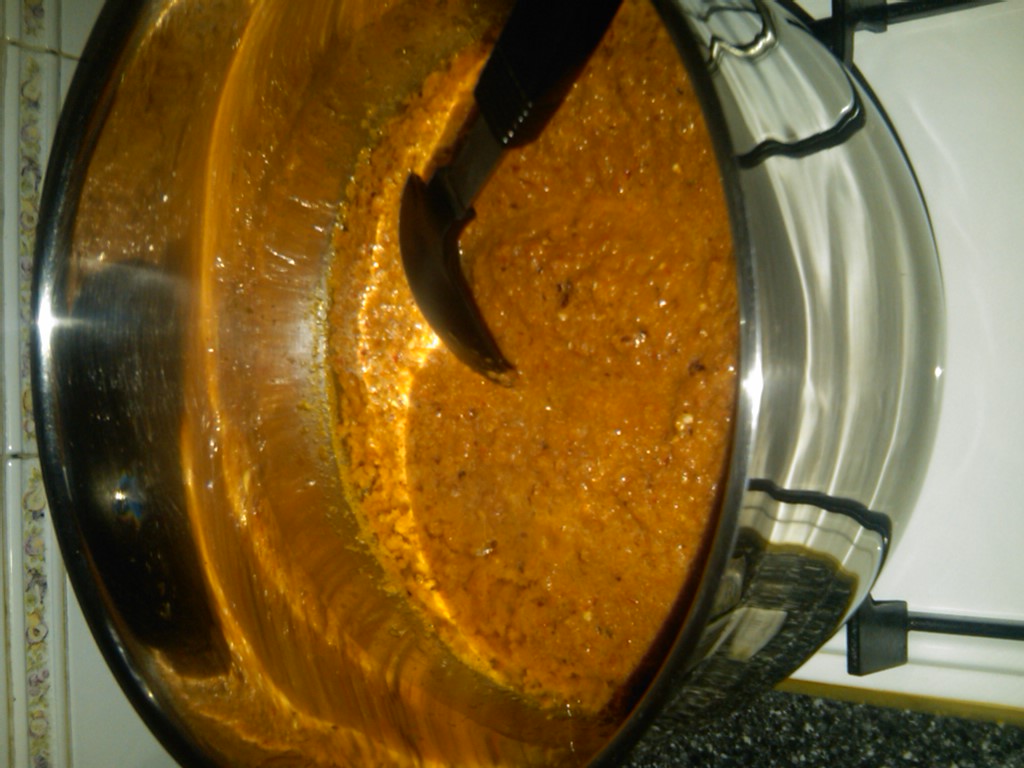
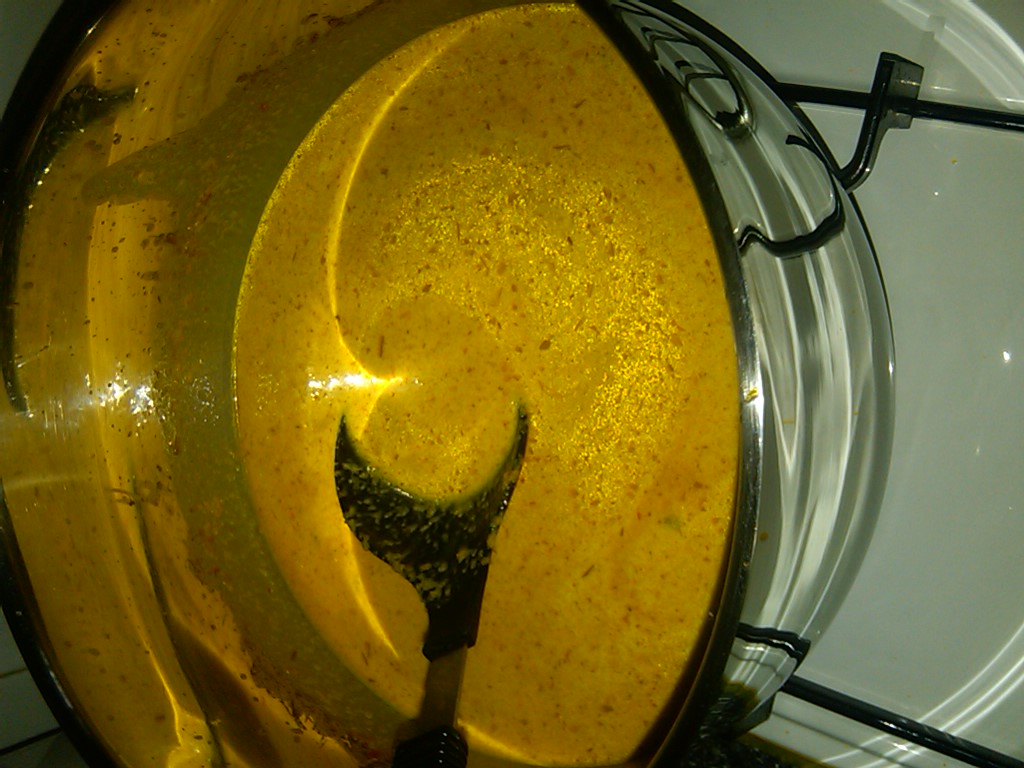
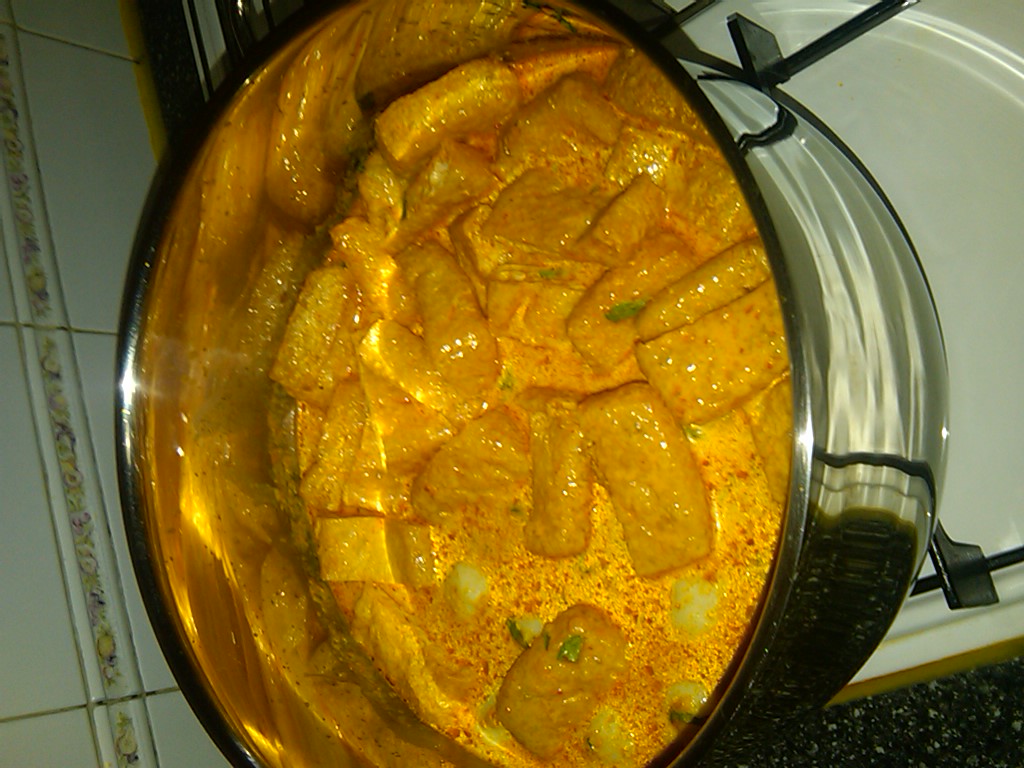
After which, I fried the paste in oil till the oil separates from the paste, added coconut milk and water. Then, I added in the ready made paste. I added fishballs, tau pok, and a bit of daun kesom (laksa leaves) and then, voila! My first attempt at making laksa.
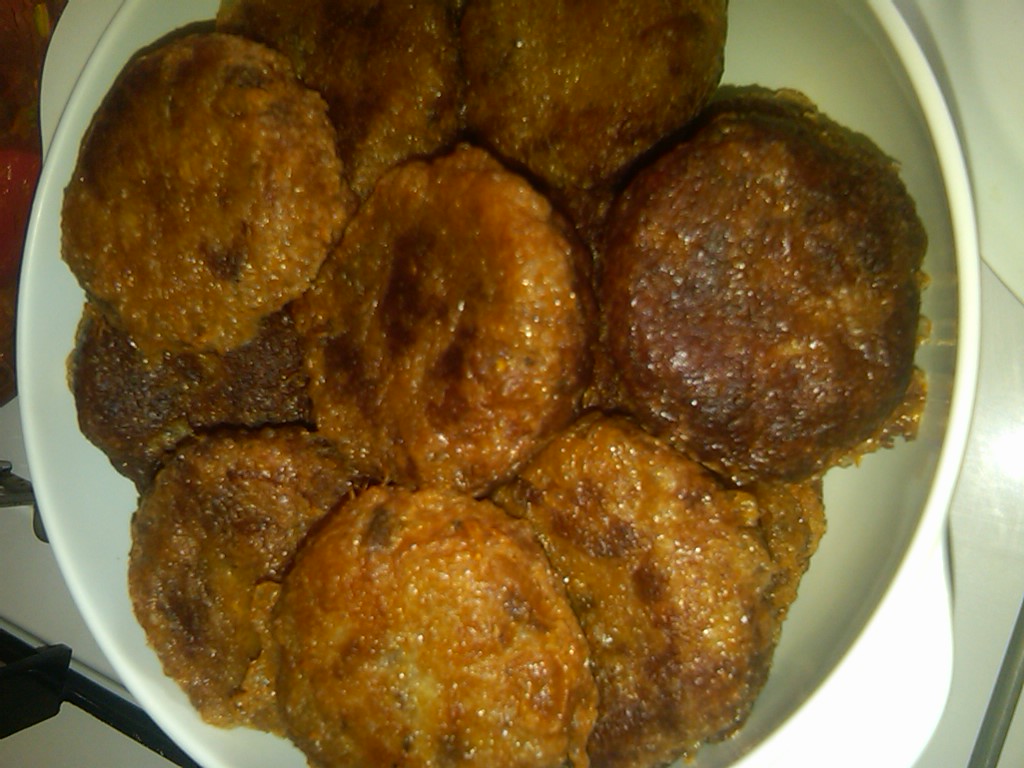
Who can claim to be a Singaporean but not like begedil? Scoffs at anyone who doesn’t like them. What is not to like? Meat? Check. Potatoes? Check. Egg? Check. Oh, no offence to vegetarians. Hmmm…
Certainly with this kind of recipes, there are many variations. Today, mine was super easy. Fried potatoes whizzed. Minced meat, fried. Add them together with some breadcrumbs (as the mixture was too soft) coat them with beaten egg before frying and voila!
A few years ago I made begedil from scratch. That is to say, I fried the potatoes and then, instead of whizzing them in the blender I used a pestle and mortar and pounded them till mashed but too too fine (like you would in a blender). Added in some fried onions, finely diced Chinese celery leaves, white pepper and minced meat. It was a labour of love for a loved one. Now, after two kids, I think the blender version would do.
Also, you could boil the potatoes instead of frying them. Basically, you can do whatever you want to them as long as you dip them in egg before you fry and they look like small little flat discs.
 The Occasional Cook