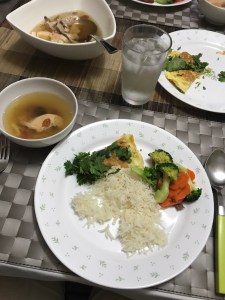
Asian Dishes, food, Japanese/Korean, Places, Seafood

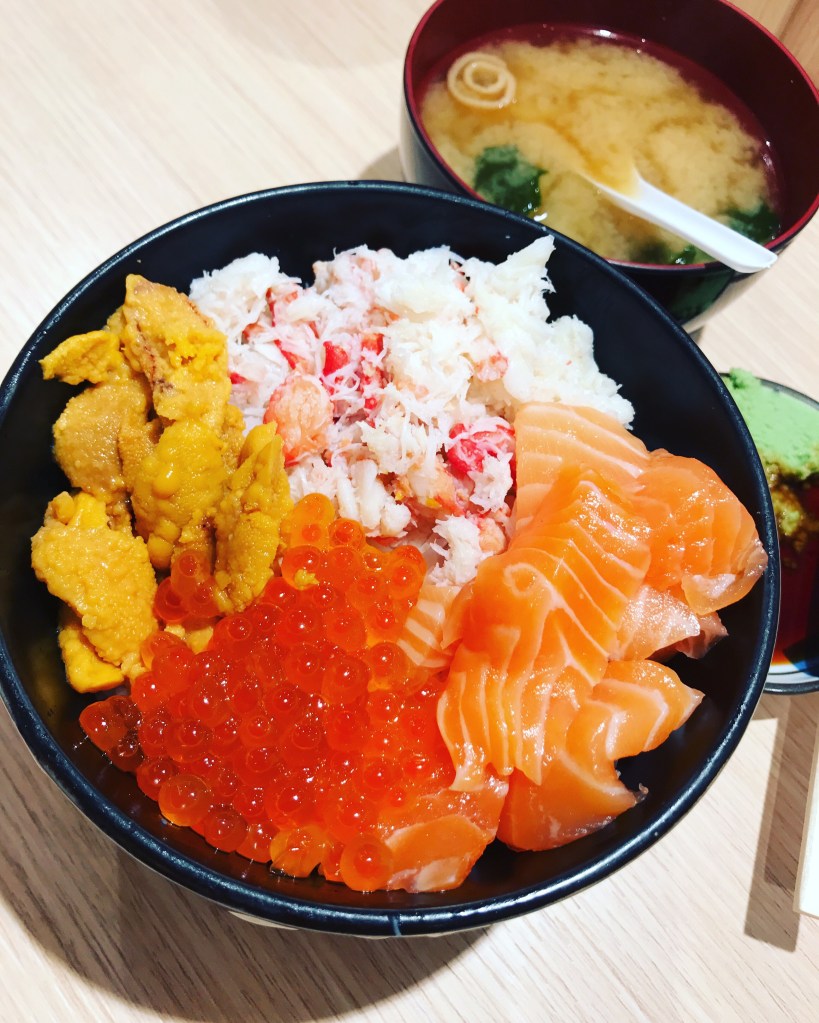
Uni in a bowl

Today my friend brought me to a space in a supermarket where we could have excellent seafood rice bowl. Most importantly, with fresh uni or sea urchin.

This dish is so decadent for me because it’s so high in purine level but we shared the bowl so I didn’t feel too bad.

After the excellent meal, I googled from my friend’s recommendation the site that ships fresh uni right to my doorstep. It is of course very pricey and I wouldn’t mind paying the price IF I am not the only one in the family eating it. So it looks like if ever I have a craving for uni, I have to make that trip downtown.

All the flavours of the sea in this bowl. 😍

Asian Dishes, food, Malay, Rice

Ketupat and Rendang and more…

It’s Eid or what we call Hari Raya in this part of the world. And though none of my family members celebrate by making and eating ketupat or rice cakes, we always welcome them if anyone would pass them to us.

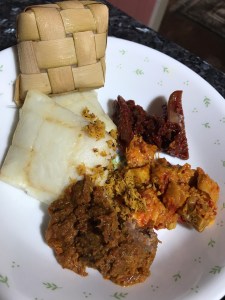
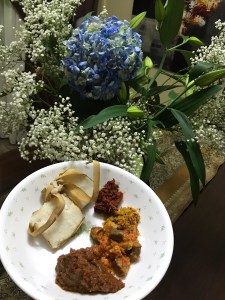
And someone did to me! A good Malay friend passed some of the ketupats her family makes together with all the trimmings.

Ketupat is usually served with beef rendang, sambal tumis sotong, sambal goreng or sambal godok. All these are traditional dishes that go so well together with the rice cake but also served a lot on a daily basis too! So I never understood why the longing for these dishes especially on Hari Raya!

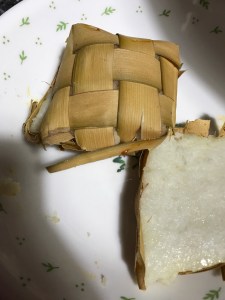
Ketupat is made by making the casing first. My late father used to be able to weave them. The casings are made from coconut leaves. After the casing is made, rice is poured halfway into the casing and then boiled for hours and then hung to dry.

My goal is to share because I don’t really know how to weave the casings but there are many videos on YouTube by real Malays to show how it’s done.

Below are pictures of the wonderful food my friend passed to us the night before Hari Raya. Enjoy watching and maybe googling more about how the Malays celebrate Eid! ☺️

Asian Dishes, Malay, Salads and Vegetables, Soups

Asam Rebus

It’s fasting month and it’s the school holidays and hence I have no choice but to cook almost daily. πŸ˜‚ I am sure once the term starts, the cooking will stop, and I’ll be the occasional cook again pottering about in my pink kitchen.

And because I have been so reliant on my Mama who has the Helper to assist her, I am embarrassed to say I can’t even cook a single of Mama’s cooking. So again the Helper had to tell me what to do step by step.

In Indonesia, this dish is called sayur asem and it’s so good with grilled meat and fish. Which is exactly what I intend to cook tonight. My Mama’s version is the Malay kampung style version which means there are no exact recipes, and you’ve got to keep on tasting till you get the right balance of seasoning.

The key ingredient of the dish is assam or tamarind. Asam keping or asam gelugur is the dried form of the tamarind fruit and then there’s the pulp form of the fruit, now easily available deseeded and in a paste. See below for the picture of the dried fruit. One piece can be already sour. But of course add more if the pot is larger or the fruit is smaller.
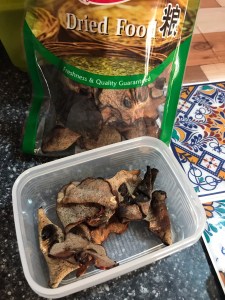
The dish calls for a lot of vegetables and the boiling method.

Step 1:

Make the rencah, or paste. My Mama’s basic recipe is one red onion, two garlic cloves, three fresh res chillies and a handful of dried ikan bilis (dried anchovies). Blend to a fine paste. According to my Indonesian Helper, the Javanese would use candelnuts in the paste. Maybe one day I’ll try and find a recipe using the Javanese version.
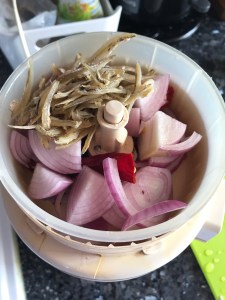
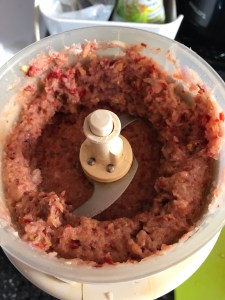
Step 2:

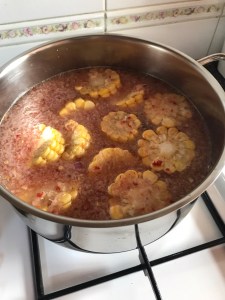
In a pot, add water and the rencah, and let boil. At this early stage, you may add the corn as it takes longer to cook. Add also a bruised lemongrass and two pieces of crushed galangal slices for the aroma.
Step 3:

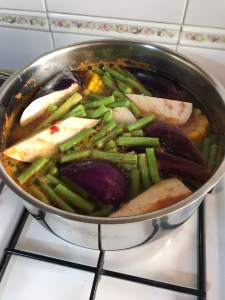
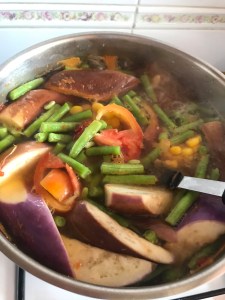
Continue to let boil while prepping the rest of the vegetables. I have here long beans, baby brinjals, cabbage and a sliced tomato. But do not add cabbage till the last bit or it’ll be very soggy. Also, add the rest of the vegetables only when the rencah has boiled enough (you can smell it), about 15 minutes of rolling boil.
Step 4:

Once the vegetables are in and boiling (except for the cabbage), it is time to season the broth. Add three teaspoons of salt, one teaspoon of sugar and two or three (if small) pieces of asamgelugur. Let boil and taste. Adjust the salt and sugar content if needed. Add one teaspoon of asamjawa, the tamarind paste if it’s not sour enough. Let mixture boil and then finally add the cabbage.
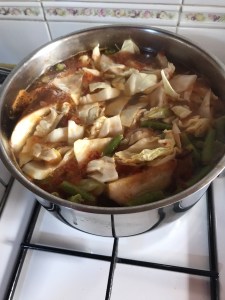
This is the final product in the pot. I’ll probably update this post later after dinner to show how it’s served with the other dishes.

It’s a very healthy vegetable dish. Try it!

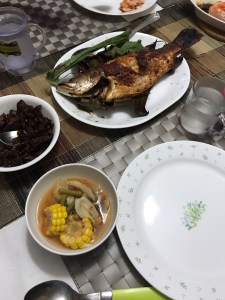
Update: Asam Rebus eaten with grilled fish and tempeh manis.
Asian Dishes, Malay, Seafood

Stir Fried Prawns with Pineapples

Even though I cannot eat prawns anymore, I still cooked them tonight just because I had bought a kilo of it before I knew my test results. And even though I vowed not to eat them when cooked, I caved and ate two pieces πŸ˜…

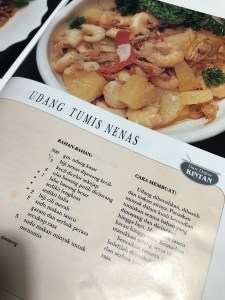
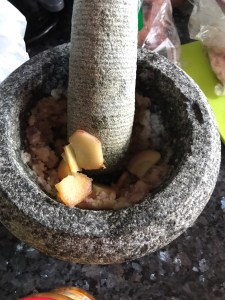
The dish is inspired and copied from my trusty Malay cookbook from a decade ago. It is so simple to make! Unfortunately, instead of slicing the garlic and the rest of the aromatics, my helper pounded them fine. But no worries, it still worked out fine.

This is the original recipe in Malay which I’ll translate at the end of the post.

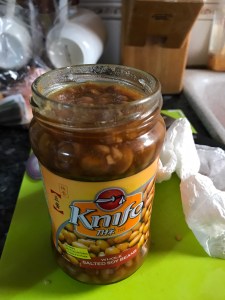
It’s such a simple but delicious meal to make. Taucu (pronounced TAO-CHO) is salted soy beans.

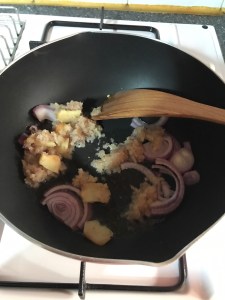
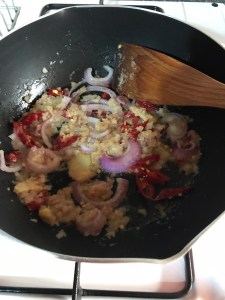
For the dish, I added oil to the pan and then the pounded garlic and ginger. Then the sliced galangal, red chillies and onions. After which prawns and two tablespoons of crushed taocu. There’s no need at all to add salt as the taocu is already salty. Then, from a can of cubes pineapples, throw away the juice and add half a can when the prawns are cooked. Serve hot garnished with fresh coriander.

I served this with baked teriyaki salmon, herbal chicken soup, stir fried baby greens and plain rice. The Macdonald’s comment was because yesterday I ordered it for dinner and we all fell sick. The food was not digestible. Maybe it’s an age thing. Or an Asian thing haha.The Recipe from the book calls for:

  • 300 g fresh prawns
  • 1/2 a fresh pineapple cubes
  • 4 garlic cloves, sliced
  • 1 onion, sliced
  • A bit of galangal, sliced
  • A bit of ginger, sliced
  • 2 red chillies, sliced
  • 2 tbsp of taucu (salted soy beans)
  • Salt and pepper (you really don’t need the added salt)
  • Oil to stir fry the ingredients in
Asian Dishes, Chinese, Poultry, Soups

Herbal Chicken in a Thermo Pot

I used to watch over my pot boiling for hours this chicken soup dish but with the thermo pot it’s so simple!

The family loves Chinese herbal chicken soup and thankfully shops sell plenty of the ready made herbal ingredients.

To make this dish, it is really about buying, and then throwing all in and wait it out. I love it!

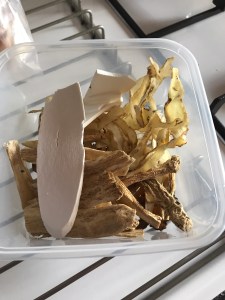
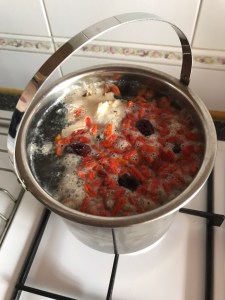
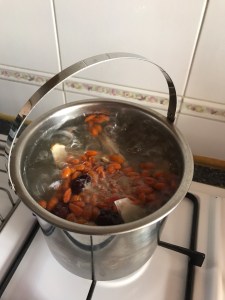
The above are some of the root ingredients that come in the packet. With it are also a small packet of goji berries. I added some red dates which I kept in the fridge in the mix too.

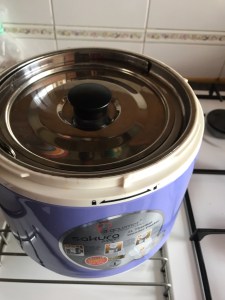
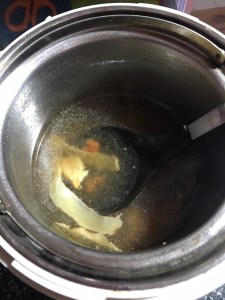
My thermal pot is a small one but it’s enough for the four of us and even for leftovers the next day! I only added three large pieces of chicken meat to it.

Boil furiously for ten minutes or more then cover in the thermal pot.

Since it’s fasting month, it was a perfect dish to keep.

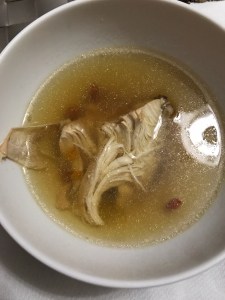
The taste is sublime! So chickeny and herbally! I served it with rice, and fried broccoli with beef, omelette and plenty of fresh coriander.